1PD · B2B SaaS · Lead UX designer · 2022
One place for ad data, then a test of how far marketers trust AI
1PD brings Google Ads and Facebook Ads data into a single platform. I led the UX from a set of Data Studio reports to a launched product, then prototyped an AI chat assistant and tested it with nine marketers.
Covered: research, product design, AI prototyping
- My role
- Lead UX designer, working with one junior designer.
- Team
- Founders in Australia, developers in Asia, me in Europe. Fully remote.
- Timeline
- January to December 2022. The AI concept followed in 2023 and 2024 as my own project.
- Status
- The first version launched. The AI assistant is a tested prototype.
The problem
In interviews with agency marketers and freelancers, the same three problems kept coming up.
Reports they could not trust
Each ad platform reports on itself, and its numbers can look better than the real result.
No easy comparison
Comparing Facebook with Google meant advanced spreadsheet work most marketers did not have time for.
No time
Collecting the data was the slowest part of their day, before any analysis began.
The research
- 25
- people sorted 65 cards to shape the navigation
- 7
- one-hour interviews with freelancers and agency staff
- 9
- usability tests with marketing and e-commerce professionals
- 30+
- design iterations, reviewed in daily stand-ups across time zones
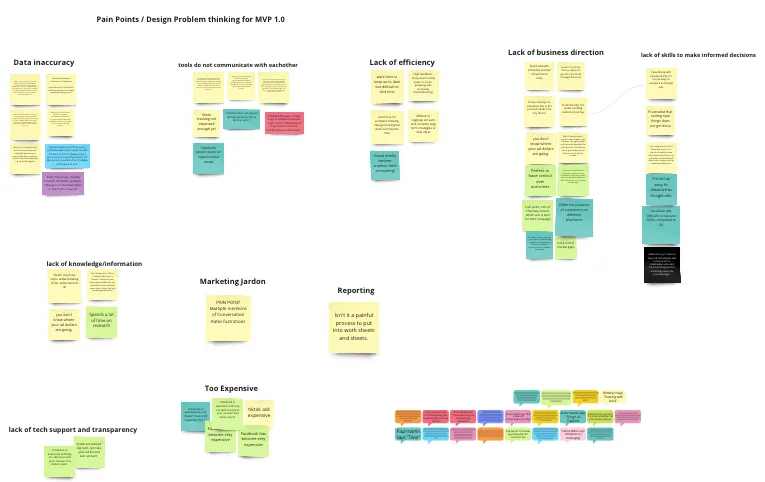
The card sort overturned the team's plan. None of the menu categories we had assumed made sense to users.
I renamed the categories, added a new one and reorganised what sat under each. That small study also changed how the founders saw research: it had just saved them from building the wrong navigation.
of the menu names we planned survived a test with real users. They also added a seventh we had not thought of.
25 people sorted 65 cards in their own way, before a single screen was designed. Without that test, the product would have shipped with a menu its own users did not recognise.
The first version
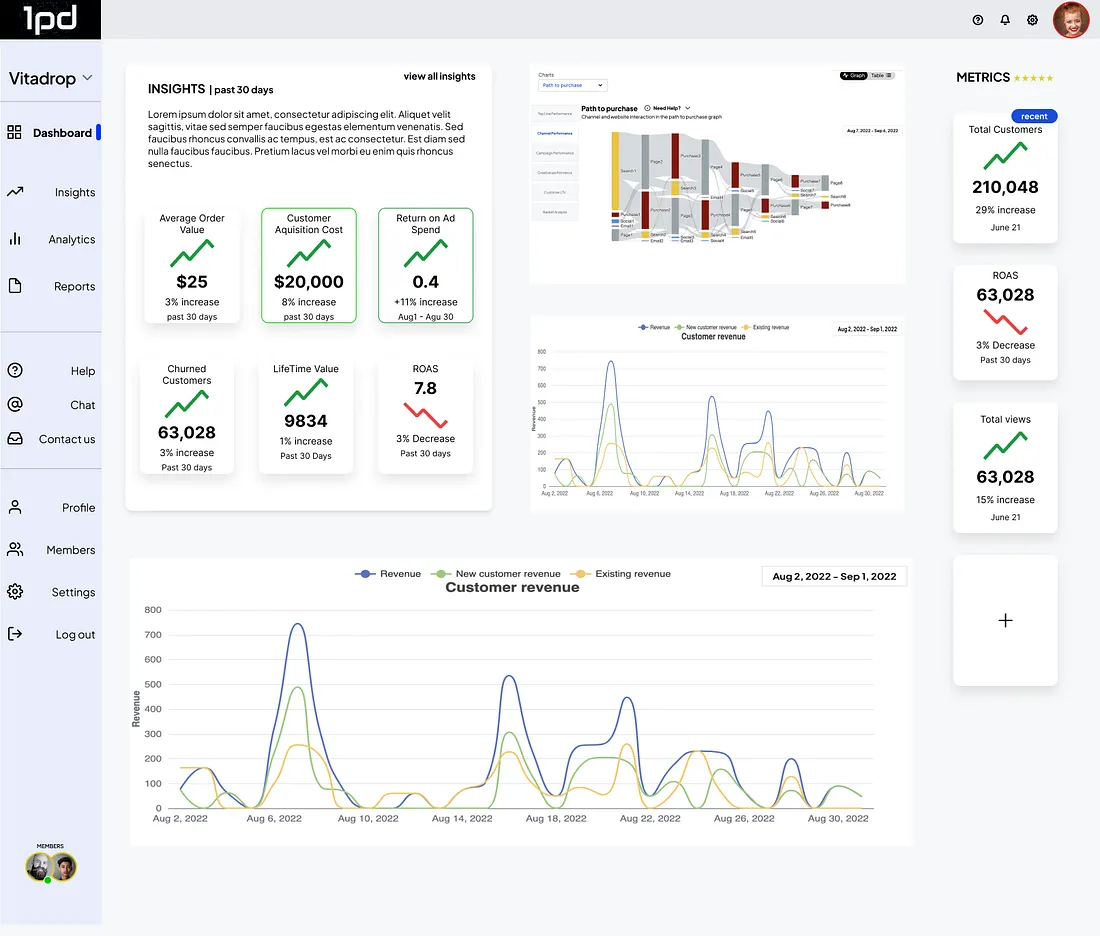
Different marketers needed different numbers, so the key decision was a dashboard each person can arrange for themselves.
I went from sketches to tested prototypes, working in Figma with the developers so that design questions were settled on the file itself. The founders launched this version to market.
My own follow-up project · Prototype, not released
Then I tested an AI assistant
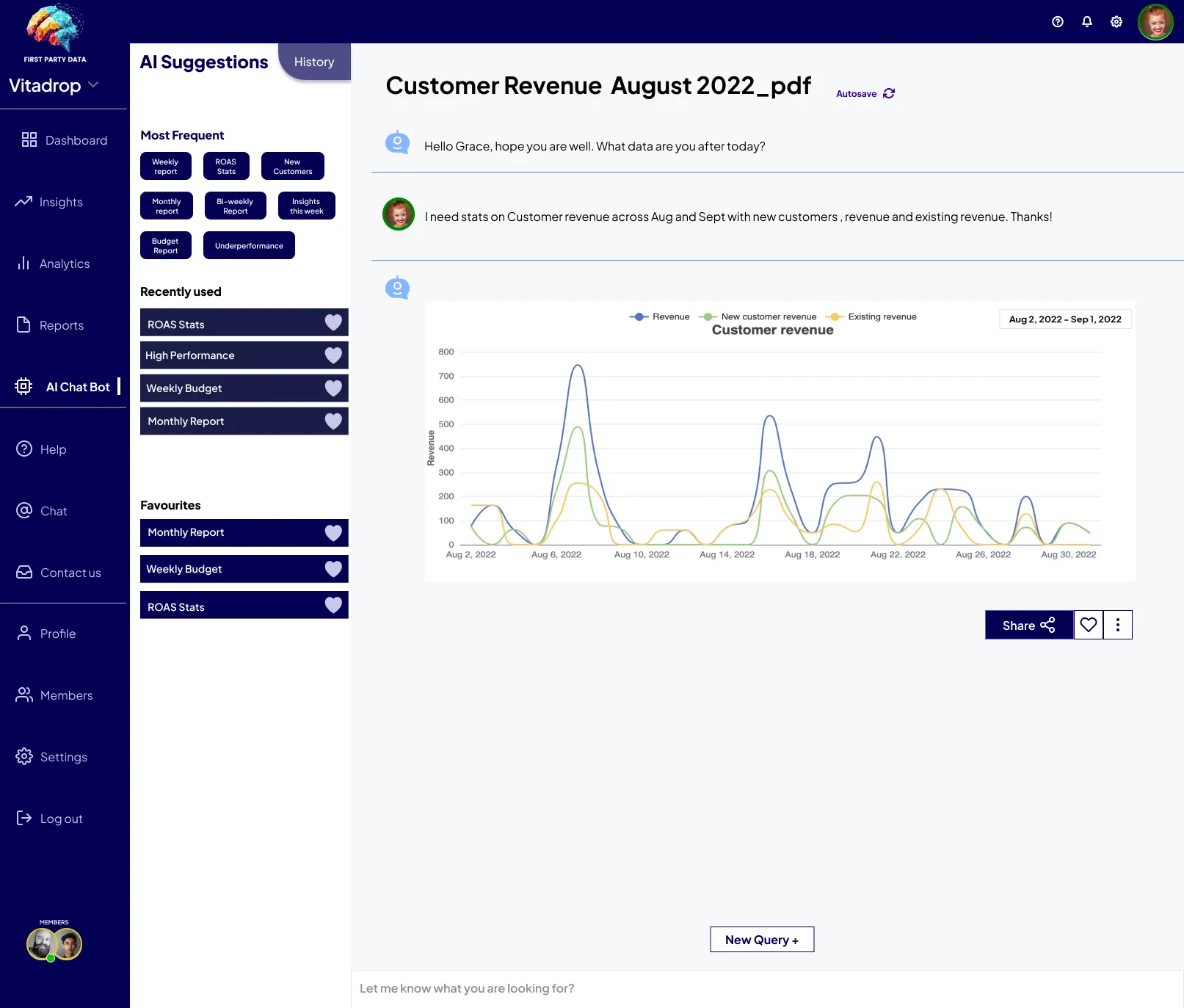
Testing the first version showed people struggling to find information deep in the menus, newer users most of all. So I prototyped a chat assistant that sits beside the menu, answers questions in plain language and saves the history. Nine marketers tried it.
They wanted both
More than half asked to keep the traditional dashboard next to the assistant.
They checked its answers
People repeatedly wanted to verify the numbers the AI gave them.
Experts went to the source
Experienced analysts still opened the raw data, and used the AI to work backwards from a result.
The decision that followed: AI is a choice, not a replacement. The assistant sits alongside the dashboard, and every answer can be traced to its data.
What happened
The first version launched and the contract finished ahead of schedule. 1PD then invested in a sales team to take the dashboard to market, and it has been live and in active use since end 2022.
The AI assistant stayed my own project. After my contract ended, I kept going: when OpenAI launched its API in 2023, I built the integration myself and carried the research, testing and iterations forward from there.
What I took from it is a rule I now apply to every AI feature: people need to stay in control and be able to check the answer.